ULAB's Globalization Spring 2025 course students visit the lifestyle of the Manta community
Publish Date: November 17, 2025
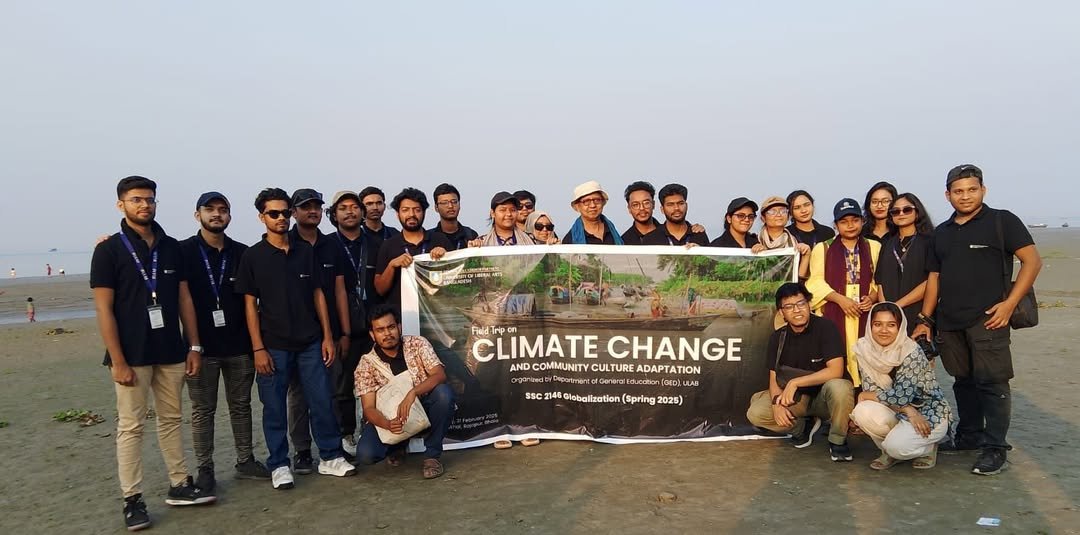
A field trip was organized on February 20, 2025, as part of the GED Globalization (Spring 2025) course to visit the Manta community of Bhola. The main objective of the field trip was to gain practical experience about the livelihood, social and economic conditions and educational opportunities of the marginal fishing Manta community in the context of #climate #change. It was conducted under the supervision of ULAB professors and researchers and was completed in collaboration with the local organization “Jago Nari”.
In this field trip, 33 students went on a field trip led by the principal researcher Dr. Ahmed Abid and the research coordinator Dr. Asaduzzaman Mohammad. In addition, two ULAB mentors, Zubayd Hossain and Rajanul Raj, participated for the students. Our 6-member team was led by Field Trip Team Leader Sabrina Mostafa Shuchi and Mahmudul Hasan Sumon. Also present were Ahmed Hamim, Noor Subha Biva, Afrina Chowdhury Sohana and Momtaz Fahmida Rifa.
Observations show that most of the people of this community live on boats and their livelihood is mainly fishing. They live in a very hostile environment, where basic amenities are lacking. Education and healthcare have become major challenges for this community. There are not enough schools for the children of the Manta community and the literacy rate is also very low. In addition, lack of healthcare, malnutrition and insufficiency of safe water have become major obstacles in their daily lives.
The situation of women was also specially observed. Although women of the Manta community play an important role in the family and livelihood, they face various social and economic challenges. Their educational opportunities are limited and they face various obstacles in accessing healthcare.
During the visit, Jago-Nari, a service organization, organized a community consultation, where the main discussion was on increasing educational opportunities and opening a school. In this discussion, members of the Manta community expressed their opinions and highlighted the need to increase educational opportunities. The local organization “Jago Nari” is already working on this issue and plans to take more development initiatives in the future.
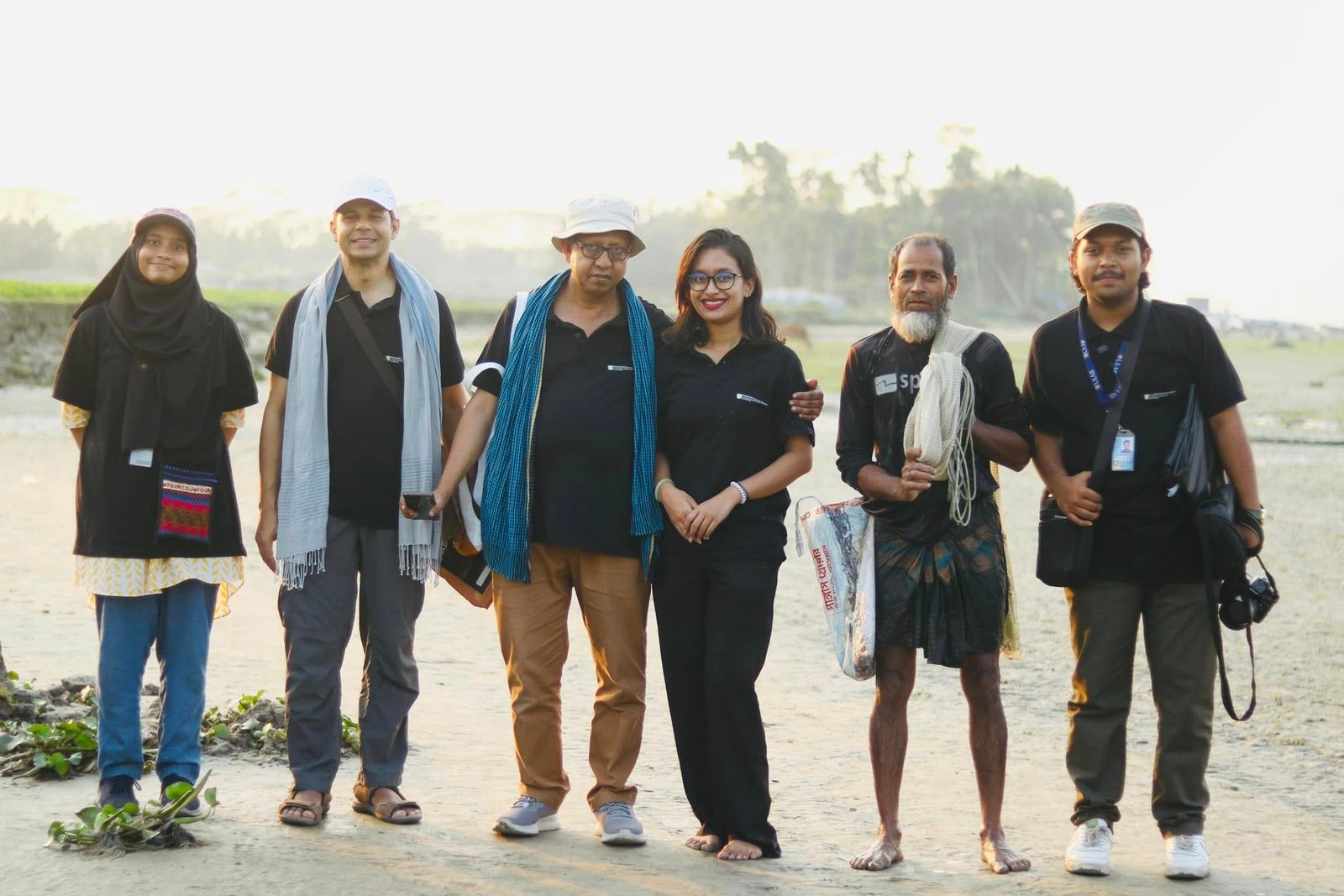
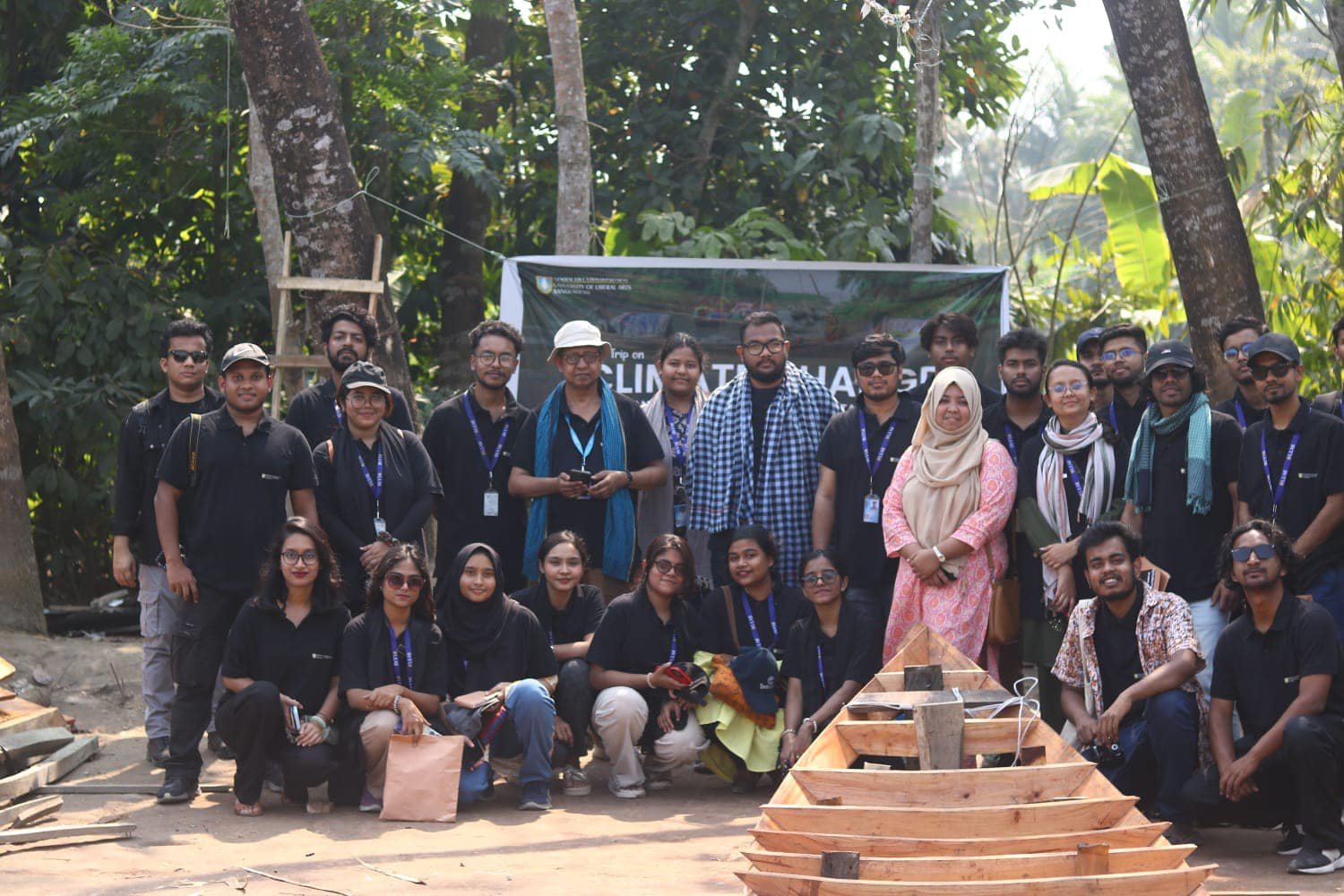

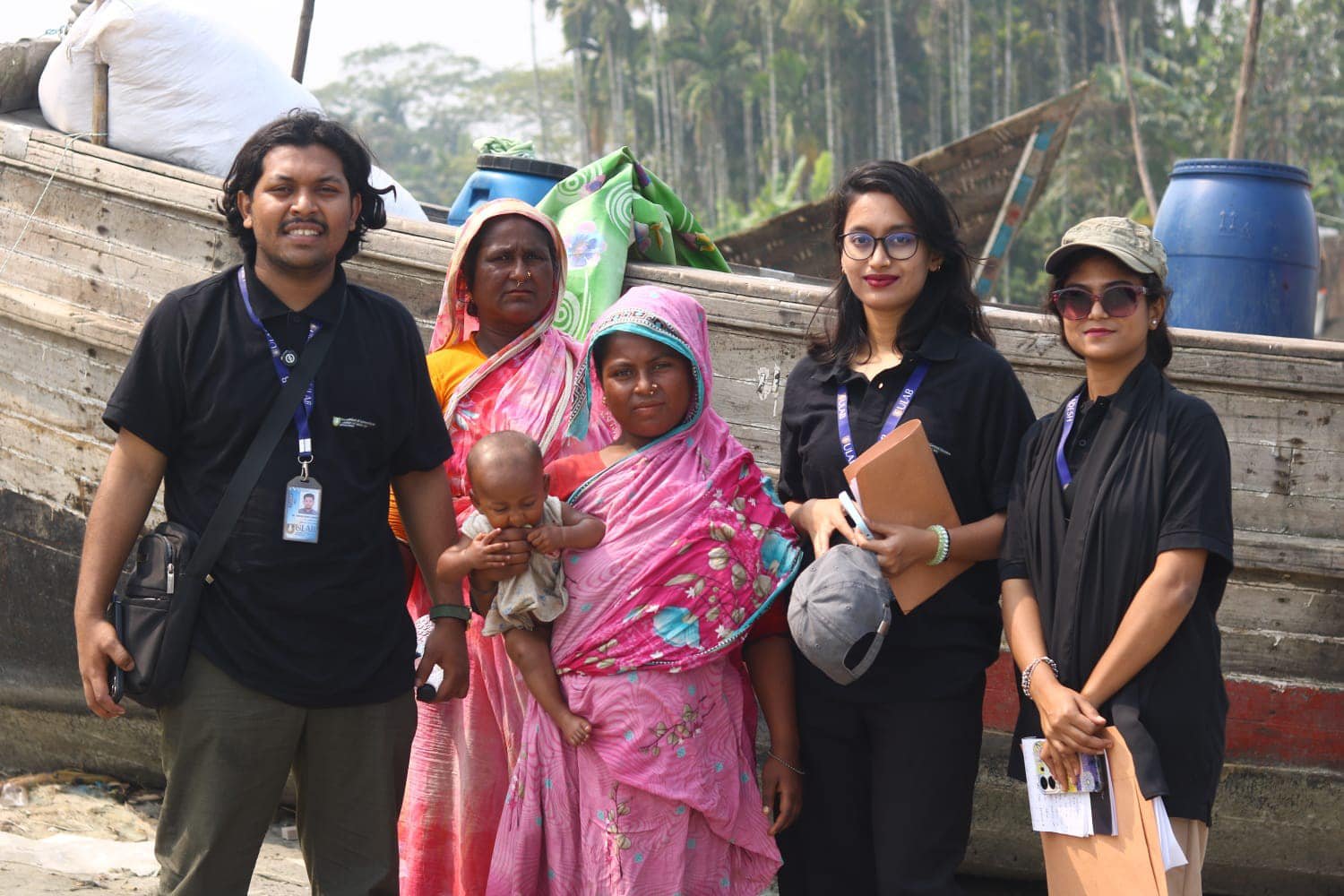
Through the field trip, the students got the opportunity to gain practical experience and gain knowledge about the real picture of globalization and social inequality. It was possible to directly observe the issues of lack of educational opportunities, limited healthcare, and discrimination against women. The students observed and learned that the Jale community is generating electricity with the help of solar panels and using it. Women are quite enthusiastic about using sanitary napkins for their needs. They also have some idea about birth control methods.
Since the people of the Manta community do not have any land or house, they live on boats. Even their cooking is done on boats. While the general public engages in fishing as well as agriculture, the Manta community is solely dependent on fishing. The life of the Manta people is very risky, as they stay in boats even during natural disasters. We spoke to them and learned that they do not take shelter in any kind of shelter during this time.
A woman named Lucky, who is over 20 years old, said, “We do not know anything about this, we do not even know where the shelter is.” Many times, when their boats break in storms and their lives are at risk, they take temporary shelter in nearby boats. Seeing the life of the Manta community has increased the sense of social responsibility among the students.
The field trip was very successful, and the entire program was conducted without any accidents. It was an important learning and research experience for all of us. We need to think about how to work in the future for the development of the Manta community and it is important to take long-term steps in this regard.
The report is a sample of that – so that we can share this experience with friends and Ulabians. This experience has made us more sensitive to the marginalized groups of our society and inspired us to contribute to social development.
Report Authors:
- Sabrina Mostofa Suchi
- Mahmudul Hasan Sumon
- Noore Subah Biva
- Afrina Chowdhury Sohana
- Momtaj Fahmida Rifa
- MD Kawsar Ahmed Hamim
GED Globalization (Spring 2025)